The Saudi Royal Family Controls All Arab Media Outlets.
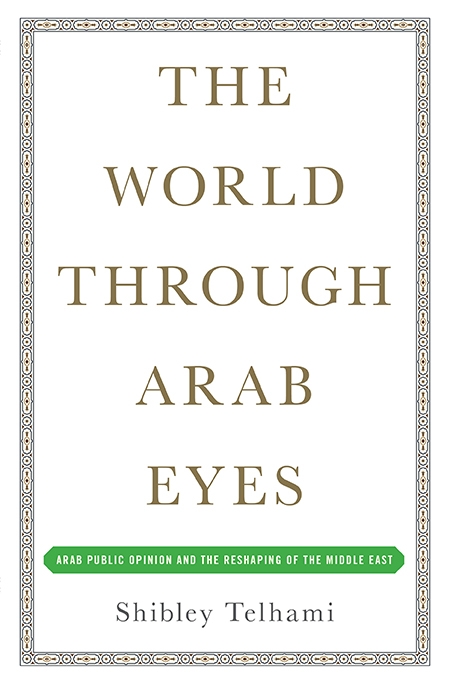 In this affiliate from Shibley Telhami's new book, The World Through Arab Optics: Arab Public Opinion and the Reshaping of the Eye Eastward, Telhami looks at the impact of Al Jazeera — the Eye East'due south largest news network — on the region'southward irresolute media landscape.
The Arab media explosion that recently has culminated in uprisings across the region springs from two interrelated sources: the growth of satellite television and the affordability of the receivers to the Arab masses, and the mutual language that Arabs share beyond land boundaries. Standard arabic unified a media market of some 350 million people in 20-two countries and beyond.
Even earlier tv, in the 1950s and 1960s there had been a dramatic increment in radio usage across the Arab world, especially afterwards the rise of transistor and brusque-wave radios and their availability to the masses. The most striking and influential example was Sawt al-Arab Radio ("Vocalism of the Arabs"), sponsored by Egypt to spread Nasser's Pan-Arabist bulletin in the 1950s and 1960s. This station was so pop beyond the region that it presented existent challenges to Nasser'southward political opponents among the bourgeois Arab rulers in places similar Saudi Arabia and Hashemite kingdom of jordan, who attempted to jam the broadcasts.
Fifty-fifty Israel exploited the medium, especially after the 1967 Arab-Israeli state of war, when its Arabic radio began broadcasting programs specifically aimed at Egyptians. Knowing that Nasser had prohibited popular songs and fifty-fifty soccer games following the war in favor of martial music and a more than somber focus on preparation for a new war, the Israelis made sure to air the Egyptians' favorite songs as a way of luring listeners to their political perspective. Radio, of course, was relatively easy to jam and governments worked to cake threatening broadcasts, simply its ultimate undoing every bit a primary source of news came with television'south power
By the early 1990s television had get king of the media, and each country had made certain it had its own TV stations as a fashion of edifice local identity and loyalty and equally a means of controlling the flow of data to the public. In those days, average Arabs in well-nigh countries received their news from national nightly news broadcasts entirely controlled by the government. Viewers had to endure lengthy coverage of routine events, such equally visits of rulers to a hospital or a village, before they got to serious news, which was filtered to protect the rulers and advance their immediate interests.
This would all brainstorm to change earlier the twentieth century was out, but although Al Jazeera has become synonymous with a new world of Arab media change, it was not the pioneer. In the 1980s and 1990s, Kingdom of saudi arabia and wealthy members of the Saudi royal family unit took the lead by purchasing popular Standard arabic newspapers and distributing them beyond the region, and hiring some of the region's most prominent journalists. They understood that their broader Arab consumer needed more than news and more diversity, and they allowed greater coverage of Arab and international issues—although critical coverage of Saudi arabia and its royal family unit remained taboo. They as well pioneered new satellite stations, beginning with i called MBC, in the early 1990s; these reached more often than not the elites, every bit satellite applied science was expensive at that time. The overall outcome of this Saudi-sponsored media was to bear witness the potential for a larger media marketplace and likewise the potential threats other governments could face from transnational media. This simultaneous sense of inspiration and threat is likely what inspired the emir of Qatar, Sheikh Hamad Bin Khalifa Al Thani, to start Al Jazeera ("Peninsula" in Arabic, referring to the Arabian Peninsula, of which both Qatar and Saudi Arabia are parts) in 1996.
Coming to power merely a year earlier later on a palace coup that replaced his father as emir, Al Thani and Qatar were often criticized by the media, including the Saudi-controlled transnational newspapers. The criticism was directed not but at the circumstances of his takeover but also at independent policies he pursued that were not fully in harmony with Saudi policy, including warming up to State of israel and taking the lead in helping to normalize relations betwixt Israel and Arab countries. The emir didn't appear to accept an specially progressive or a Pan-Arab agenda; withal, by creating a station that reached not just the 250,000 Qatari citizens but as many as possible of the region's 350 million Arabs, he hoped to have abroad viewership from stations disquisitional of him and of Qatar. In that location was another service that Al Jazeera provided to Qatari rulers: As a welcome vocalism viewed past Arabs as reflecting their ain aspirations, Al Jazeera helped protect the Qataris from intense criticism for being a pro-American emirate that hosted a base for American airplanes attacking Iraq in the unpopular 2003 Republic of iraq war. And given the contest, Al Jazeera'due south mission wasn't that difficult.
Now, instead of having to view lengthy footage of the royal family unit coming together foreign guests, viewers were exposed to programming that almost Arabs hungered for, from opposing opinions to more information on bug they cared deeply well-nigh as Arabs and Muslims. This included alive footage of bloodshed in Israeli confrontations with the Palestinians—footage that Arab national television broadcasts limited then as not to awaken their public'south passion. Al Jazeera farther broke taboos in the 1990s past reporting from the Israeli Knesset (parliament), showing open debates, including sharp criticism of the Israeli regime past Arab members of the Knesset. Ane Arab nationalist member of the Knesset heavily covered by Al Jazeera, Azmy Bishara, later settled in Qatar and became a regular Al Jazeera commentator.
The result was a remarkable rise: In simply v years, by 2001, Al Jazeera had succeeded in condign the most watched Arab telly station for news, and inside ten years more than than iii-quarters of Arabs identified Al Jazeera as existence either their kickoff or 2nd option for news. The station's success also spawned competitors, from a transformed Abu Dhabi Television set, to Al Arabiya, BBC Arabic, Iran's Alalam, French and Russian Standard arabic stations, and many other country-based stations available on satellite.
With not bad success, though, came not bad criticism, at first from exterior the Arab earth and later from within it.
Mirroring, Not Leading, an Audience
In the years afterwards 9/11, particularly in the aftermath of the Iraq state of war, many American commentators and politicians blamed the Arab media, especially Al Jazeera, for stoking Arab acrimony against American strange policy. I of the ideas presented to accost this perceived bias of the Arab media was to back an alternative American Idiot box station, chosen Al Hurra, that would compete in the marketplace and offer a more "objective" view of events. Similar other American attempts to win hearts and minds in the Arab globe, this was an idea doomed to failure from the get-go.
To exist certain, at that place is room for outside views, whether from Due east or West, in the crowded Arabic media marketplace. And in that location are plenty of models—from BBC to Russian and Iranian Arabic TV. But while one can make a strong example for having an American Arabic Idiot box station such as Al Hurra Television set, there never was a meaning possibility that it would supplant or fifty-fifty seriously claiming Al Jazeera or other popular Arabic stations. It seems clear that the popular Arabic outlets succeeded considering they reflected the hearts and minds of the region on cadre issues, not because they shaped them.
To test this thesis, I set out to study 2 somewhat unique cases that have small but diverse populations: Lebanon, and the Palestinian/Arab citizens of Israel.
In the case of Lebanese republic, the politically consequential diversity of the population—multiple Christian sects, Sunni and Shiite Muslims, and Druze, with no single sect constituting a majority—provides some guidance to the self-selection involved in media viewership. Given that Lebanon had a competitive media market even in the days of government monopoly in other parts of the Arab world, the viewing habits of the various segments of its population are telling.
Polls I have conducted over the past decade arrive articulate that sectarian identity is a pregnant predictor of television news selection. In the 2011 poll, 52 percent of Shia Lebanese, for example, identified Al Manar TV of the Shiite grouping Hezbollah as their start choice for news, compared with only iv pct of Sunnis and Druze and ane percentage of Christians. Similarly, 58 percentage of Druze, 49 percent of Christians, and 46 percent of Sunnis identified the liberal Lebanese TV station LBC as their first choice, compared with only fifteen percent of Shiites.
Al Jazeera'due south viewership in Lebanon varied more than in other parts of the Arab globe, particularly among Sunnis and Shiites as Lebanon became entangled in divisive internal politics after the 2006 Israeli-Hezbollah war. Before that war, viewership of Lebanese Tv set stations still broke down along sectarian lines, but Al Jazeera was identified by a good number of Lebanese every bit their start pick for news—in part because its reporting focused more on regional problems, peculiarly the Iraq war and its consequences. In 2006, for instance, just prior to the Lebanon-State of israel state of war, 43 percent of Lebanese Shiites, 33 per centum of Sunnis, 25 percent of Druze, and 16 per centum of Christians identified Al Jazeera as their outset selection. By 2011, with Al Jazeera seen to be taking sides in favor of Sunnis, only seven percent of Shiites identified it equally their first choice for news.
The indicate is that while there are multiple reasons audiences view a particular station for news, the most disquisitional factor is the extent to which a station reflects their views on bug that matter most to them and to their identity. When a station fails to do this, viewers look for alternatives.
In a more nuanced case, I conducted polls among Palestinian/Arab citizens of Israel. This segment of the Arab population exists in a democratic state with a relatively costless media environment. Amongst this population the offset language is Arabic, but most are also fluent in Hebrew. Arabs in State of israel are thus able to watch media from both Arab and Israeli sources.
In the get-go ii decades of Israel's being, Palestinian Israelis primarily listened to Arab radio stations for news, peculiarly Egyptian, Syrian, and Jordanian stations. When they wanted to hear outside views, they typically listened to the BBC in Arabic, the French Radio Monte Carlo, or the Vocalization of America. Most of them were not all the same fluent in Hebrew and thus did not closely follow Israeli TV and radio in significant numbers. The Israeli government had its own Arabic radio programming, which was listened to by some, but always with suspicion, given the ongoing conflict betwixt State of israel and the Palestinians. More than whatever station, even so, Arabs in Israel, like Arabs elsewhere, listened to Sawt al-Arab Radio, which reflected the views of Egypt and Gamal Abd Al-Nasser. So loftier was their trust in Nasser'southward narrative that even when information technology became abundantly articulate by the end of the 1967 state of war that Arab armies, including Arab republic of egypt's, had been badly defeated and that Israel was now occupying what had been Egyptian, Jordanian, and Syrian territories, some Arabs in Israel continued to believe that this was merely a trap set by Nasser.
It didn't take long, though, for the narrative to begin shifting, and soon the credibility of Sawt al-Arab and other Arab media collapsed in response to ongoing and mounting evidence that the balance of power in the region rested overwhelmingly in Israel's favor. Past then more Arabs had get fluent in Hebrew, and while they saw Israel's Standard arabic media as propagandistic, they saw the Hebrew media as more apparent. I exercise not accept polling data on the trends and viewership in the 1970s and 1980s, just anecdotal evidence suggests that more and more Arabs in Israel were getting their news from Hebrew sources and viewing Arab sources with suspicion.
Simply with the rise of the Pan-Arab media in the 1990s, viewership trends shifted yet again. Equally happened in much of the region, these stations, especially Al Jazeera, came to dominate the news media market in ways not witnessed before. Like Nasser's Sawt al-Arab, Al Jazeera first and foremost catered to Arab hearts, but dissimilar Sawt al-Arab it provided more timely data and far more than diversity of views.
In polling I conducted from 2009 to 2011, I sought to understand the tendency in viewership amongst Israeli Arabs. Overall, roughly the same portion of Arab-Israelis as Arabs elsewhere in the Middle Eastward—roughly half— identified Al Jazeera as their first pick for news. This finding has been relatively robust for the three years studied. At the same time, roughly ane-quarter to i-third say Israeli Tv set is their outset option for news, but what is more interesting is the sectarian habits amongst Muslims who constitute more than 70 per centum of Arabs in Israel. Only 17 percent of them identified Israeli Tv set as their first selection, while 53 percent identified Al Jazeera. In contrast, amid the Druze—who, different other Arabs, are required to serve in the Israeli military—68 percent identified Israeli Television, while fifteen percent identified Al Jazeera. Amongst Christians, 46 percent identified Israeli TV, while 31 percent identified Al Jazeera.
That identification is disquisitional, for the selection of news media tin also exist seen in evidence from beyond the sectarian divide. In the 2010 poll, I bankrupt downward the Arab-Israeli population into two groups: those who had relatives who became refugees in 1948, and those who didn't. Roughly 53 percent of those polled said they had relatives who were refugees. Of those, 60 pct identified Al Jazeera equally their start option for news, whereas 60 pct of those who didn't have refugee relatives identified Israeli tv equally their first option. This trend seemed to utilise to all sects, once again suggesting that preexisting and identity-defining attributes provide a good predictor of media selection.
The Ability Behind the Media
Why does Al Jazeera continue to thrive despite increasing competition? And what fuels the expanding Arab media without realistic prospects of profit?
It is impossible to answer these questions without reference to the political aims of the sponsors and the aspirations of the consumers.
Al Jazeera has been successful largely because it understands the media market and its consumers. Merely it's unlikely Al Jazeera would have succeeded without the billions of dollars in resources committed to it by the Qatari rulers over the past decade and a one-half. Viewers want a station that reflects their core identity and positions on cardinal issues, simply they also want timely and all-encompassing information, which is expensive to provide.
Because Al Jazeera is well funded and doesn't need to make a profit, it tin can provide extensive coverage where others have failed. In the 2008–2009 Gaza war, for example, no station anywhere in the globe could friction match Al Jazeera'due south coverage, with multiple reporters in Gaza itself, in Israel, in the West Bank, and in Egypt. In fact, no other television station had live coverage from Gaza or Israel during the war—an advantage that many stations, including American, tried to overcome in the Nov 2012 Gaza fighting by sending reporters to Gaza. And even though Al Jazeera is often accused of bias or of an ideological bent, it has been assuming in ensuring presentation of multiple views, including presenting Israeli views dating dorsum to the 1990s, when few other Arab stations dared exercise so, too as airing Bin Laden tapes, Iranian views, and hosting or covering speeches and news conferences of American officials—including so-secretary of defence force Donald Rumsfeld, American military commanders and spokesmen, and White House and State Section officials—during the Iraq state of war. And then while Al Jazeera officials understood and catered to their audition, they also made sure they ever aired views that challenged, sometimes fifty-fifty offended their audience.
There was likewise a price to be paid for Al Jazeera's extensive coverage. About every authorities in the region was offended by Al Jazeera at some indicate, which resulted in significant pressures on the Qatar government. The U.s. accused Al Jazeera of incitement, and even Mainland china in 2012 was angered by Al Jazeera coverage, taking action against Al Jazeera English.
The question is, for what purpose does Qatar back up Al Jazeera? What does Qatar proceeds?
One cannot completely rule out an ideological position of the emir. Al Thani one time described himself to me as a "Nasserist," or an gentleman of the Pan-Arabist Gamal Abd al-Nasser, and Al Jazeera has indeed hosted Arab nationalists equally regular commentators, including Egypt's most prominent analyst, Muhammad Hassanein Heikal. But the network also hosts prominent Islamists, such every bit Sheikh Yousuf Al Qaradawi. Beyond any progressive or pan-Arab aspiration of the leadership, the strategy is only seen to be in the long-term survival of the Qatari leadership and of the emirate itself.
To brainstorm with, Qatar is a small, ultrawealthy country across the Gulf from Islamic republic of iran and neighboring a larger and more powerful boyfriend fellow member of the Gulf Cooperation Council (GCC), Saudi Arabia, with which it has not always had an piece of cake relationship. Qatar considers the United states of america its primary strategic ally and hosts a major American base on its soil—not something popular in the Arab earth. Later the 1993 peace understanding betwixt Israel and the Palestine Liberation Organization, Qatar was among the virtually forthcoming of Arab states to reach out to State of israel. For that reason, and for its propensity to pursue a policy independent from Saudi arabia, the dominant Saudi-owned media, as well as the Egyptian media, fabricated Qatar their favorite target of criticism.
Al Jazeera became an instant counterweapon. Start, by simply overtaking the Saudi and Egyptian media, it deflected criticism against the emirate and its leaders. 2d, past providing a credible fresh news outlet that focused on Pan-Arab issues, it gained accolades that counterbalanced the perception that it was a key American ally and friendly to State of israel. Third, the success of Al Jazeera provided Qatar an instrument of leverage in dealing mostly with its detractors. Better to be close to one'southward rival when the rival is funding the master media source in the Arab world.
But the Arab uprisings created both new opportunities and new challenges for Al Jazeera. On the one mitt, Al Jazeera seemed on the right side of history: It was a central part of the information revolution that enabled the uprisings, and the uprisings themselves created new opportunities for coverage as Arabs everywhere tuned in to the story. On the other hand, the Arab uprisings seemed nearly unstoppable. Could they sweep the Arab world all the way to the doorsteps of the Gulf monarchies, including the Qatari rulers themselves?
Potentially facing mutual threats, Qatar found itself increasingly closer politically to its GCC partners, especially its senior partner Saudi arabia, despite their sometimes uneasy, even competitive relations. In the coverage of the uprisings in Libya and Syria, Al Jazeera and the Saudi-funded Al Arabiya took closer positions than ever. On GCC partner Bahrain, where a Sunni monarchy ruled over a revolting Shiite majority, Al Jazeera covered the story but only to a limited degree. Al Jazeera's explanation focused on the lack of access allowed past Bahraini authorities, simply it was hard to miss the Qatari dilemma, and hard to convince critical commentators that politics were not an important consideration. Only Al Jazeera'due south biggest challenge in pleasing its audiences was in the Syrian uprisings, to which Al Jazeera dedicated significant resource and made them its priority story for months. While Arabs were overwhelmingly sympathetic with the Syrian people against the Assad regime, they were heavily divided on the wisdom of external intervention, which Al Jazeera seemed to favor, increasingly reflecting the foreign policy position of the Qatari authorities on this effect.
In stark contrast to 1996 when Qatar's part in regional politics was relatively small, by the time of the Arab uprisings, Qatar itself had become a significant player in the geopolitics of the region: from leading the arming and funding of Syrian rebels, mediating amongst Palestinian factions, funding the reconstruction in Lebanon after the 2006 state of war, and providing more than aid to Arab republic of egypt than anyone else later on the revolution, to sending military back up for the entrada against Muammar Qaddafi in Libya. To the extent that Arabs were divided on many of the problems in which Qatar was involved, both Al Jazeera and Qatar were leap to come under greater scrutiny.
This opened Al Jazeera up to some criticism from some former admirers on the left. In an article for the Lebanese newspaper Al Ahkbar titled "Al Jazeera's Autumn: The Fall of an Empire,"2 columnist Pierre Abi Saab conveyed a feeling shared by a sizable minority who had previously admired Al Jazeera:
After the spread of satellites in the 1990s, Arabs came to know two types of liberation. The first is social . . . and the second was political, with Al Jazeera, which imposed itself in a brusk time, regionally and internationally. It is the story of Alice in Wonderland. In a small rich country [Qatar], an heady new information experiment was started, and bet on difference, courage, and professionalism. From covering the story to carrying the flag of the stance of the other, an alternative media took shape that viewers of official idiot box could never imagine, from the [Atlantic] sea to the Gulf.
This surprising innovation became a source for the Arab individual who hungered to uncover what was unsaid, and to follow the political debate, even if in passing. How is it possible for a political regime that differed little from those around information technology to create this progressive opening, which made many ignore the strange mix of political constituents for the TV station: from the Iraqi Baath to the liberalism that legitimized Israel during one menstruum, to an Islamist electric current that swallowed those who opposed it? Who cares? Arabs now had their equivalent of CNN that looks from another angle at events, from the British-American state of war on Iraq to the Israeli assaults on Lebanon and Gaza, ending upwards in the Tunisian and Egyptian revolutions—history was taking shape live on Al Jazeera. And so the Qatari regime discovered a new hobby, and decided to become a sponsor of the Arab revolution. The station rolled over the Manama [Bahrain] bound like the Saudi tanks in society to "lead" the motion for change in Syrian arab republic. Speedily professionalism began to slip, turning into intended deviations, then systematic lies, equally is proven by documents and statements that take leaked out in recent weeks. Non that the Syrian regime is beyond tyranny and repression, only the media chat took the defection away from the people. On the rock of the Syrian tragedy, the kingdom of delusion was shattered. The station returned to its natural size. Suddenly viewers noticed that they are watching an official medium akin to those nosotros run into in all the disciplinarian systems. It even surpasses the latter past virtue of its experience and reputation and claims of independence and objectivity. Today, scandals and resignations go along, leaving in the retention of the contemporary Arab media a deep wound named Al Jazeera.
Al Jazeera Faces the Hereafter
Despite such blistering criticism from within the Arab world, there is no prove even so that Al Jazeera has lost significant viewership. On the one manus, its predilection (reflecting its funders) against the Syrian regime and its reserved coverage of Bahrain play well amongst the more often than not Sunni Muslim population of the region. About ninety pct of Arabs also share Al Jazeera's back up for the rebels in Syrian arab republic. Simply the push for international intervention in Syrian arab republic is a source of deep division among Arabs, and this has opened Al Jazeera to criticism every bit the number of its media competitors has increased. Two other factors could play a role in determining Al Jazeera's authorisation: the emergence of alternative complimentary media in newly democratizing countries, particularly Arab republic of egypt, and the increasing number of Arabs, especially among the immature, who now get their news non from TV but from the Net.
Information technology is already clear that the open up environments in Egypt and Tunisia accept generated media that are far more bonny both to local audiences and to Arab audiences outside. In Egypt, whose population constitutes nearly ane-quarter of the entire Arab globe, at that place are many people with considerable journalistic talent and skill who have been stymied by the political control of state-supported media—indeed, and then stymied that many of the most talented journalists left the country to work for the likes of Al Jazeera, Al Arabiya, and the BBC. The overthrow of Mubarak has brought far more than variety to the pages of newspapers and on television, both private and public networks, and a clear display of previously hidden talent. Popular television host Hafiz Mirazi, who had go a star kickoff on Al Jazeera and subsequently on Al Arabiya, has now returned to Egypt to host his own show on Arab republic of egypt's Dream TV. Muhammad Hassanein Heikal left Al Jazeera and joined Egypt's private television station, CBC. Others will follow.
Egyptian media has the potential to somewhen put pressure on other Pan-Arab TV stations. But the problem for any aspiring media competitor is not simply putting forth a credible product only as well having the significant resources required to provide the kind of timely coverage of international and regional issues that Arab viewers now expect.
This lonely is a potential barrier to objectivity. As however at that place is simply not enough ad acquirement in the Arab earth to sustain a competitive station, and the most substantial funds bachelor for advertising come from governments and the elites effectually them, or from parties that practice not want to alienate ruling elites, especially in the Gulf region. Egypt's new government, like its old, may want to invest heavily in state-sponsored media, but that volition inevitably infringe on its freedom of expression, even in a more democratic Egypt. Local private stations that have proliferated may do well locally, merely they will not have the resource to encompass regional and international news competitively. And government regulators may try to limit the influence of individual media, as they did in November 2012 by requiring Dream Telly (a privately owned Egyptian station launched in 2001) to relocate its headquarters.
This resource dilemma for the Arab media means that even as the market place grows more frustrated with existing stations similar Al Jazeera, the scale of the enterprise dictates that there volition be limited numbers of possible competitors and that those competitors will probable come with their own political baggage.
The same resources dilemma volition ultimately affect Internet news likewise, although to a bottom extent. Fifty-fifty at present, as TV is losing news-market share to the Net, all the successful Telly stations have Net sites, some of which are among the most popular sites in the Arab world, including Aljazeera.cyberspace. Inevitably, those sites that have the resources to provide the freshest information and to constantly update the news will likely do best in the market. These emerging sites have to compete with websites with no geographic tie to the region, including popular news sites in the West and elsewhere— newspapers such as the New York Times and the Washington Post; news websites such every bit Foreign Policy and the Huffington Mail; TV sites such as CNN, the BBC, and Fox; and even comedy news icons like Jon Stewart and Stephen Colbert—just as my polls show, the majority of Arabs who utilize the Internet get principally to Arabic-linguistic communication websites. And those with resources—and agendas—will strive to employ their resources to influence the new market place of information and ideas.
Editor'due south Note: The chapter also appeared on Salon.com on June 15, 2013.
Source: https://www.brookings.edu/articles/al-jazeera-the-most-feared-news-network/
0 Response to "The Saudi Royal Family Controls All Arab Media Outlets."
Post a Comment