According to researchers, what is the greatest threat to wild species?
T he world'southward wild animals populations take plummeted by more than than two-thirds since 1970 – and there are no signs that this downward trend is slowing. The commencement phase of Cop15 talks in Kunming this week will lay the groundwork for governments to depict up a global agreement next yr to halt the loss of nature. If they are to succeed, they will need to tackle what the IPBES (Intergovernmental Science-Policy Platform on Biodiversity and Ecosystem Services) has identified equally the 5 key drivers of biodiversity loss: changes in state and body of water utilise; straight exploitation of natural resources; climate change; pollution; and invasion of alien species.
one
Changes in land and body of water use
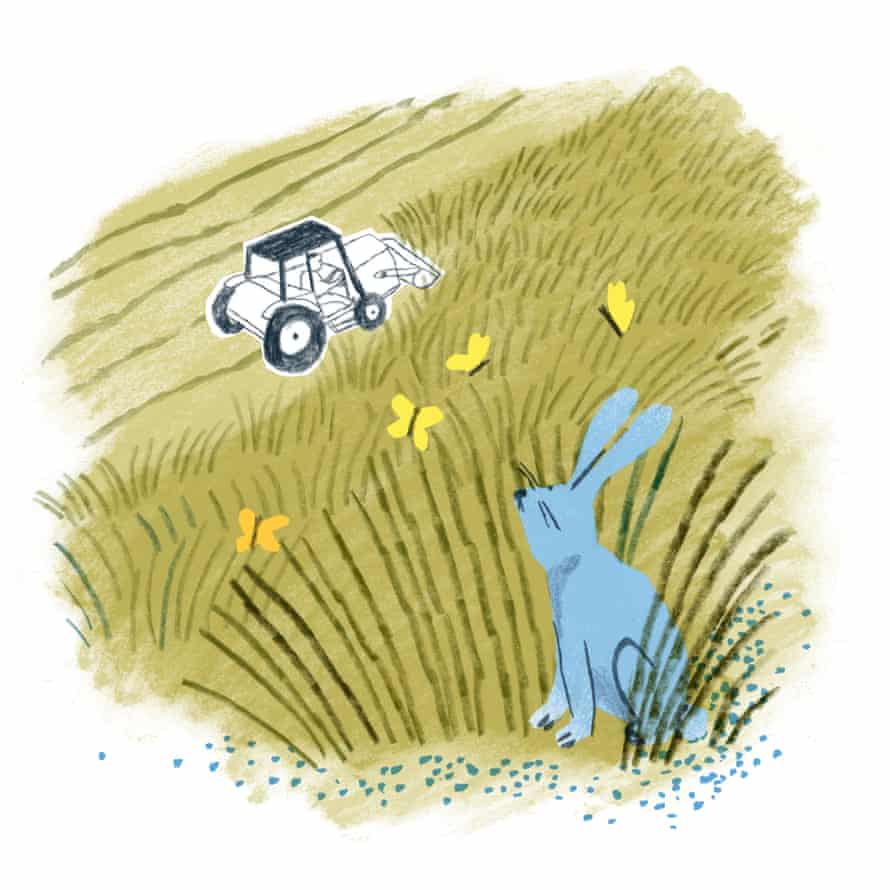
Clearing the Usa prairies: 'On a par with tropical deforestation'
"Information technology's hidden destruction. Nosotros're still losing grasslands in the U.s.a. at a rate of half a meg acres a yr or more."
Tyler Distraction, from the University of Wisconsin-Madison, knows what he is talking almost. Distraction and a team of researchers used satellite information to map the expansion and abandonment of land across the US and discovered that 4m hectares (10m acres) had been destroyed betwixt 2008 and 2016.
Large swathes of the Usa' corking prairies continue to exist converted into cropland, co-ordinate to the research, to brand way for soya bean, corn and wheat farming.
Changes in land and sea apply has been identified as the master driver of "unprecedented" biodiversity and ecosystem modify over the past fifty years. Three-quarters of the land-based environment and about 66% of the marine environment have been significantly altered by homo deportment.
Northward America'southward grasslands – frequently referred to as prairies – are a instance in betoken. In the United states of america, almost half have been converted since European settlement, and the most fertile state is already being used for agriculture. Areas converted more recently are sub-prime agricultural state, with 70% of yields lower than the national average, which ways a lot of biodiversity is being lost for diminishing returns.
"Our findings demonstrate a pervasive design of encroachment into areas that are increasingly marginal for product but highly significant for wildlife," Lark and his team wrote in the newspaper, published in Nature Communications.
Boggier areas of land, or those with uneven terrain, were traditionally left as grassland, only in the past few decades, this marginal land has also been converted. In the US, 88% of cropland expansion takes place on grassland, and much of this is happening in the Great Plains – known as America'south tum – which used to be the most extensive grassland in the world.
Q&A What are the 5 biggest threats to biodiversity?
Show
Co-ordinate to the UN's Convention on Biological Diversity there are five main threats to biodiversity. In descending guild these are: changes in land and sea use; direct exploitation of natural resources; climate change; pollution and invasive species.
one. For terrestrial and freshwater ecosystems, land-use change has had the largest relative negative impact on nature since 1970. More than a third of the earth's land surface and nearly 75% of freshwater resources are now devoted to crop or livestock production. Alongside a doubling of urban area since 1992, things such every bit wetlands, scrubland and woodlands – which wildlife relies on – are ironed out from the landscape.
two. The direct exploitation of organisms and non-living materials, including logging, hunting and fishing and the extraction of soils and water are all negatively affecting ecosystems.In marine environments, overfishing is considered to be the most serious commuter of biodiversity loss. I quarter of the world'south commercial fisheries are overexploited, co-ordinate to a 2005 Millennium Ecosystem Cess.
3. The climate crunch is dismantling ecosystems at every level. Extreme conditions events such as tropical storms and flooding are destroying habitats. Warmer temperatures are also irresolute the timing of natural events – such as the availability of insects and when birds hatch their eggs in spring. The distribution of species and their range is also changing.
iv. Many types of pollution are increasing. In marine environments, pollution from agricultural runoff (mainly nitrogen and phosphorus) practise huge damage to ecosystems. Agronomical runoff causes toxic algal blooms and fifty-fifty "dead zones" in the worst affected areas. Marine plastic pollution has increased tenfold since 1980, affecting at least 267 species.
5. Since the 17th century, invasive species have contributed to 40% of all known animal extinctions. Near i fifth of the World'due south surface is at risk of plant and animal invasions. Invasive species change the composition of ecosystems past outcompeting native species.
Hotspots for this expansion have included wildlife-rich grasslands in the "prairie pothole" region which stretches between Iowa, Dakota, Montana and southern Canada and is domicile to more than 50% of Due north American migratory waterfowl, as well as 96 species of songbird. This cropland expansion has wiped out nearly 138,000 nesting habitats for waterfowl, researchers estimate.
These grasslands are also a rich habitat for the monarch butterfly – a flagship species for pollinator conservation and a key indicator of overall insect biodiversity. More than 200m milkweed plants, the caterpillar'southward only nutrient source, were probably destroyed by cropland expansion, making it i of the leading causes for the monarch's national reject.
The extent of conversion of grassland in the U.s.a. makes information technology a larger emission source than the devastation of the Brazilian Cerrado, according to enquiry from 2019. About 90% of emissions from grassland conversion comes from carbon lost in the soil, which is released when the grassland is ploughed upwards.
"The rate of clearing that we're seeing on these grasslands is on par with things similar tropical deforestation, only information technology oft receives far less attention," says Lark.
Food crop production globally has increased by about 300% since 1970, despite the negative environmental impacts.
Reducing food waste matter and eating less meat would aid cut the amount of land needed for farming, while researchers say improved direction of existing croplands and utilising what is already farmed equally best as possible would reduce further expansion.
Distraction concludes: "I retrieve in that location's a huge opportunity to re-envision our landscapes so that they're not merely providing incredible food production but also mitigating climatic change and helping reduce the impacts of the biodiversity crunch past increasing habitats on agronomical country."
PW
2
Direct exploitation of natural resources
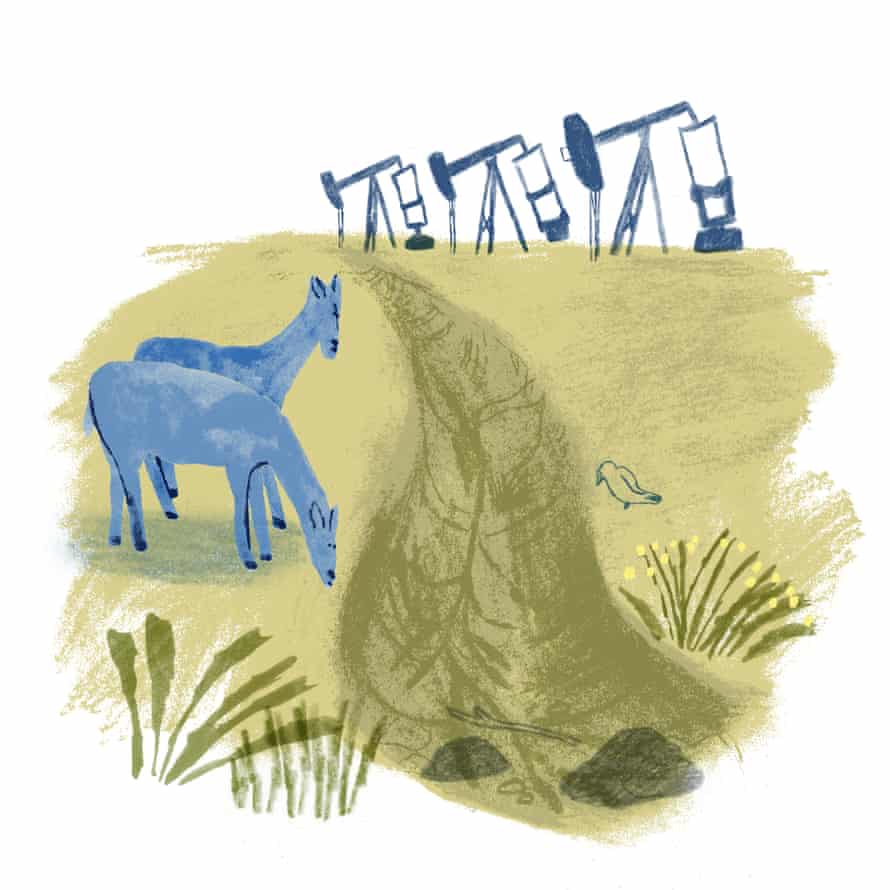
Groundwater extraction: 'People don't see it'
From hunting, fishing and logging to the extraction of oil, gas, coal and h2o, humanity's insatiable appetite for the planet's resources has devastated large parts of the natural world.
While the impacts of many of these actions tin can often be seen, unsustainable groundwater extraction could be driving a subconscious crisis below our anxiety, experts have warned, wiping out freshwater biodiversity, threatening global food security and causing rivers to run dry.
Farmers and mining companies are pumping vast underground water stores at an unsustainable charge per unit, according to ecologists and hydrologists. Almost half the world's population relies on groundwater for drinking water and it helps sustain 40% of irrigation systems for crops.
The consequences for freshwater ecosystems – among the most degraded on the planet – are nether-researched as studies take focused on the depletion of groundwater for agronomics.
But a growing body of research indicates that pumping the world'due south most extracted resources – water – is causing significant damage to the planet's ecosystems. A 2017 report of the Ogallala aquifer – an enormous water source underneath eight states in the Us Groovy Plains – institute that more than than half a century of pumping has caused streams to run dry and a collapse in big fish populations. In 2019, another written report estimated that by 2050 between 42% and 79% of watersheds that pump groundwater globally could laissez passer ecological tipping points, without better management.
"The difficulty with groundwater is that people don't meet information technology and they don't understand the fragility of it," says James Dalton, managing director of the global water programme at the International Union for Conservation of Nature (IUCN). "Groundwater tin be the largest – and sometimes the sole – source in certain types of terrestrial habitats.
"Uganda is luxuriantly greenish, even during the dry out season, just that'due south considering a lot of information technology is irrigated with shallow groundwater for agronomics and the ecosystems are reliant on tapping into it."
Co-ordinate to UPGro (Unlocking the Potential of Groundwater for the Poor), a research plan looking into the management of groundwater in sub-Saharan Africa, 73 of the 98 operational water supply systems in Republic of uganda are dependent on water from below ground. The country shares two transboundary aquifers: the Nile and Lake Victoria basins. At least 592 aquifers are shared across borders around the world.
"Some of the groundwater reserves are huge, so there is time to prepare this," says Dalton. "It's just in that location'south no attention to it."
Inge de Graaf, a hydrologist at Wageningen University, who led the 2019 study into watershed levels, found between 15% to 21% had already passed ecological tipping points, adding that in one case the effects had become clear for rivers, it was often too belatedly.
"Groundwater is irksome because it has to menstruation through rocks. If yous extract water today, it will touch on the stream menstruation mayhap in the next five years, in the next 10 years, or in the next decades," she says. "I think the results of this research and related studies are pretty scary."
In April, the largest ever cess of global groundwater wells past researchers from University of California, Santa Barbara, establish that up to one in five were at risk of running dry. Scott Jasechko, a hydrologist and lead author on the newspaper, says that the report focuses on the consequences for humans and more research is needed on biodiversity.
"Millions of wells around the world could run dry with fifty-fifty modest declines in groundwater levels. And that, of course, has cascading implications for livelihoods and access to reliable and convenient water for individuals and ecosystems," he says.
PG
3
The climate crisis
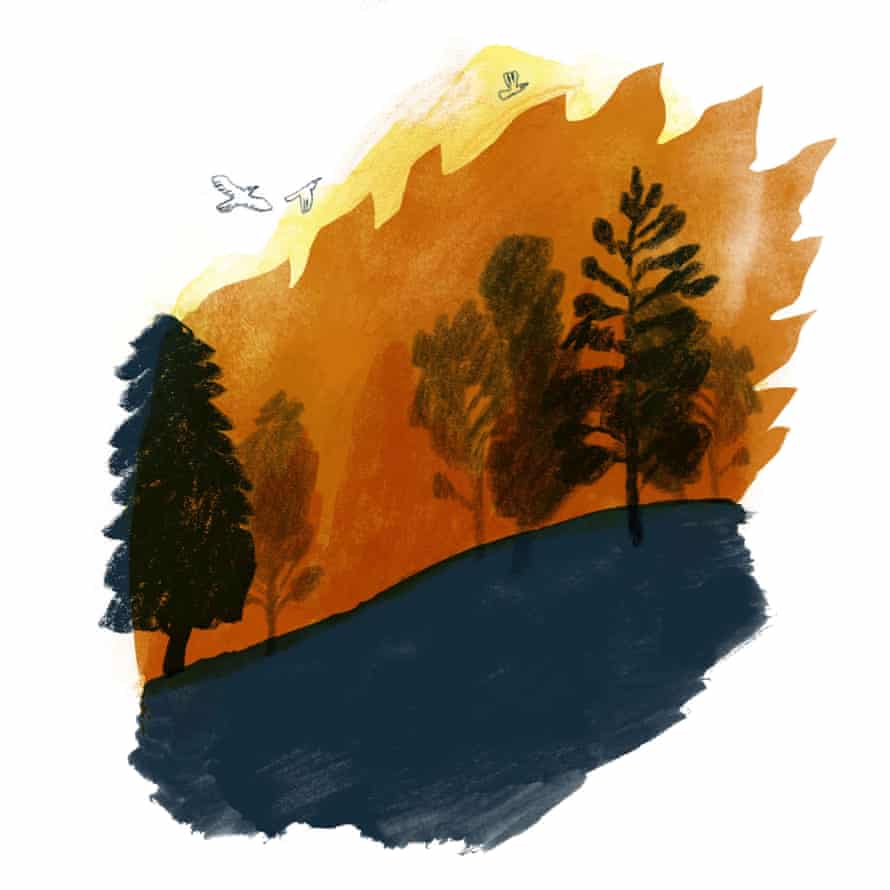
Climate and biodiversity: 'Solve both or solve neither'
In 2019, the European heatwave brought 43C oestrus to Montpellier in France. Slap-up tit chicks in thirty nest boxes starved to decease, probably considering it was likewise hot for their parents to catch the nutrient they needed, according to ane researcher. Two years afterwards, and 2021's heatwave appears to have set a European record, pushing temperatures to 48.8C in Sicily in Baronial. Meanwhile, wildfires and heatwaves are stripping the planet of life.
Until now, the destruction of habitats and extraction of resource has had a more than significant touch on on biodiversity than the climate crisis. This is likely to change over the coming decades equally the climate crunch dismantles ecosystems in unpredictable and dramatic ways, according to a review paper published past the Royal Society.
"There are many aspects of ecosystem science where we will not know enough in sufficient time," the paper says. "Ecosystems are changing then rapidly in response to global modify drivers that our research and modelling frameworks are overtaken by empirical, system-altering changes."
The calls for biodiversity and the climate crisis to be tackled in tandem are growing. "It is articulate that we cannot solve [the global biodiversity and climate crises] in isolation – we either solve both or we solve neither," says Sveinung Rotevatn, Norway's climate and surroundings minister, with the launch in June of a report produced by the world'south leading biodiversity and climate experts. Zoological Lodge of London senior research fellow Dr Nathalie Pettorelli, who led a report on the subject field published in the Journal of Applied Ecology in September, says: "The level of interconnectedness between the climate modify and biodiversity crises is high and should not be underestimated. This is not simply most climate change impacting biodiversity; it is likewise about the loss of biodiversity deepening the climate crunch."
Writer Zadie Smith describes every country's changes as a "local sadness". Insects no longer fly into the house when the lights are on in the evening, the snowdrops are coming out earlier and some migratory species, such as swallows, are starting to try to stay in the UK for winter. All these individual elements are entwined in a much bigger story of decline.
Our biosphere – the sparse film of life on the surface of our planet – is beingness destabilised by temperature change. On land, rains are altering, extreme weather events are more common, and ecosystems more flammable. Associated changes, including flooding, sea level rise, droughts and storms, are having hugely damaging impacts on biodiversity and its ability to support usa.
In the ocean, heatwaves and acidification are stressing organisms and ecosystems already under pressure level due to other human activities, such equally overfishing and habitat fragmentation.
The latest Intergovernmental Console on Climate Change (IPCC) landmark report showed that extreme heatwaves that would usually happen every fifty years are already happening every decade. If warming is kept to i.5C these volition happen approximately every five years.
The distributions of almost half (47%) of country-based flightless mammals and almost a quarter of threatened birds, may already have been negatively afflicted by the climate crisis, the IPBES warns. Five per cent of species are at risk of extinction from 2C warming, climbing to 16% with a four.3C rise.
Connected, diverse and extensive ecosystems tin assistance stabilise the climate and will have a amend chance of thriving in a world permanently contradistinct past rising emissions, say experts. And, as the Imperial Society paper says: "Rather than being framed equally a victim of climate change, biodiversity can be seen equally a cardinal marry in dealing with climatic change."
Pow
4
Pollution
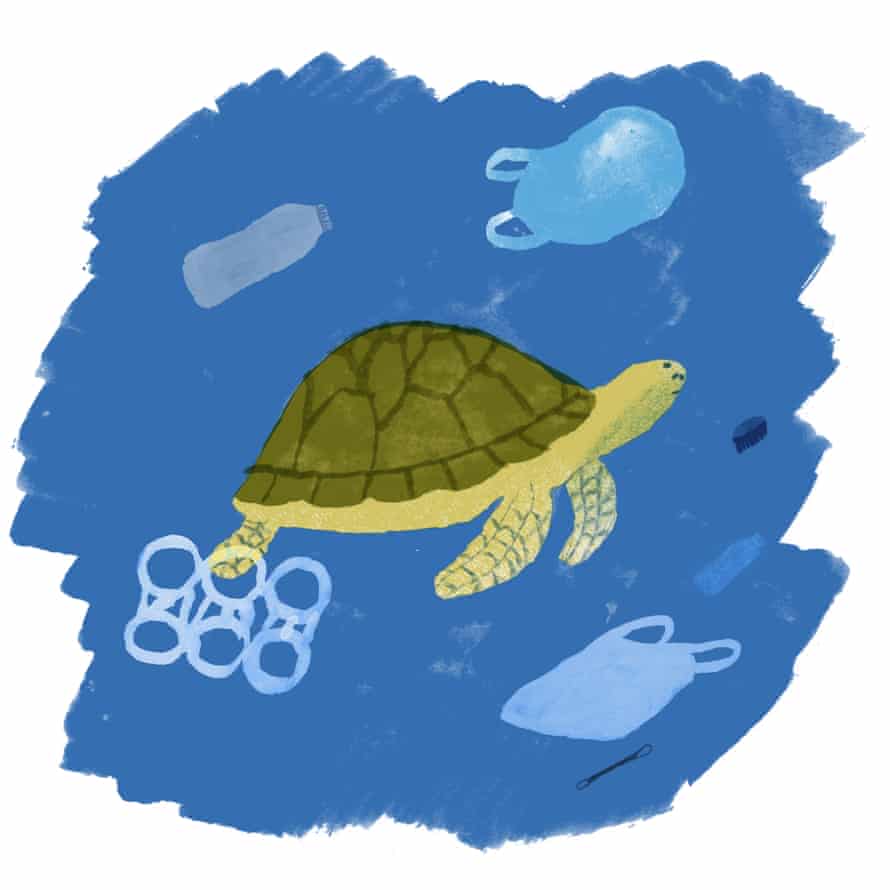
The hidden threat of nitrogen: 'Slowly eating away at biodiversity'
On the west declension of Scotland, fragments of an ancient rainforest that once stretched along the Atlantic coast of United kingdom cling on. Its rare mosses, lichens and fungi are perfectly suited to the mild temperatures and steady supply of rainfall, covering the crags, gorges and bawl of native woodland. Only nitrogen pollution, an invisible menace, threatens the survival of the remaining 30,000 hectares (74,000 acres) of Scottish rainforest, along with invasive rhododendron, conifer plantations and deer.
While marine plastic pollution in particular has increased tenfold since 1980 – affecting 44% of seabirds – air, water and soil pollution are all on the rise in some areas. This has led to pollution being singled out every bit the 4th biggest commuter of biodiversity loss.
In Scotland, nitrogen compounds from intensive farming and fossil fuel combustion are dumped on the Scottish rainforest from the sky, killing off the lichen and bryophytes that blot water from the air and are highly sensitive to atmospheric conditions.
"The temperate rainforest is far from the sources of pollution, yet because information technology'south so rainy, we're getting a kind of acid pelting effect," says Jenny Hawley, policy manager at Plantlife, which has called nitrogen pollution in the air "the elephant in the room" of nature conservation. "The nitrogen-rich rain that's coming down and depositing nitrogen into those habitats is making it impossible for the lichen, fungi, mosses and wildflowers to survive."
Environmental destruction caused by nitrogen pollution is non limited to the Scottish rainforest. Algal blooms around the world are frequently acquired by runoff from farming, resulting in vast expressionless zones in oceans and lakes that kill scores of fish and devastate ecosystems. Nitrogen-rich rainwater degrades the ability of peatlands to sequester carbon, the protection of which is a stated climate goal of several governments. Wildflowers adjusted to low-nitrogen soils are squeezed out by aggressive nettles and moo-cow parsley, making them less various.
Almost 80% of nitrogen used past humans – through food product, transport, energy and industrial and wastewater processes – is wasted and enters the environment as pollution.
"Nitrogen pollution might not result in huge floods and apocalyptic droughts but nosotros are slowly eating away at biodiversity as nosotros put more than and more nitrogen in ecosystems," says Carly Stevens, a institute ecologist at Lancaster University. "Across the Britain, we have shown that habitats that have lots of nitrogen accept fewer species in them. We have shown it beyond Europe. We have shown information technology across the US. Now we're showing it in Prc. We're creating more than and more damage all the time."
To decrease the amount of nitrogen pollution causing biodiversity loss, governments will commit to halving nutrient runoff by 2030 as part of an agreement for nature currently being negotiated in Kunming. Halting the waste material of vast amounts of nitrogen fertiliser in agriculture is a key part of meeting the target, says Kevin Hicks, a senior inquiry fellow at the Stockholm Environment Found middle at York.
"1 of the biggest problems is the menstruation of nitrogen from farming into watercourses," Hicks says. "In terms of a nitrogen footprint, the most intensive thing that you can eat is meat. The more than meat you eat, the more nitrogen you're putting into the environment."
Mark Sutton, a professor at the United kingdom Middle for Ecology & Hydrology, says reducing nitrogen pollution also makes economic sense.
"Nitrogen in the atmosphere is 78% of every breath nosotros take. It does nothing, it's very stable and makes the sky blueish. Then in that location are all these other nitrogen compounds: ammonia, nitrates, nitrous oxide. They create air and water pollution," he says. He argues that if you price every kilo of nitrogen at $1 (an estimated fertiliser cost), and multiply it past the amount of nitrogen pollution lost in the world – 200bn tonnes – it amounts to $200bn (£147bn) every year.
"The goal to cut nitrogen waste in half would salve you $100bn," he says. "I think $100bn a year is a worthwhile saving."
PG
5
Invasive species
The trouble for islands: 'We have to be very conscientious'
On Gough Island in the southern Atlantic Ocean, scores of seabird chicks are eaten by mice every year. The rodents were accidentally introduced past sailors in the 19th century and their population has surged, putting the Tristan boundness – 1 of the largest of its species – at risk of extinction along with dozens of rare seabirds. Although Tristan albatross chicks are 300 times the size of mice, two-thirds did non fledge in 2020 largely because of the injuries they sustained from the rodents, according to the RSPB.
The situation on the remote isle, 2,600km from Southward Africa, is a grisly warning of the consequences of the human being-driven impacts of invasive species on biodiversity. An RSPB-led operation to eradicate mice from the British overseas territory has been completed, using poisonous substance to assistance save the critically endangered albatross and other bird species from injuries they sustain from the rodents. Information technology volition be 2 years before researchers tin confirm whether or not the plan has worked. But some conservationists desire to explore some other controversial option whose application is most advanced in the eradication of malaria: gene drives.
Instead of large-scale trapping or poisoning operations, which have limited effectiveness and can damage other species, gene drives involve introducing genetic code into an invasive population that would make them infertile or all ane gender over successive generations. The method has so far been used but in a laboratory setting but at September's IUCN congress in Marseille, members backed a motility to develop a policy on researching its application and other uses of synthetic biological science for conservation.
"If a cistron drive were proven to be effective and there were prophylactic mechanisms to limit its deployment, you would introduce multiple individuals on an isle whose genes would be inherited by other individuals in the population," says David Will, an innovation program manager with Island Conservation, a non-turn a profit dedicated to preventing extinctions by removing invasive species from islands. "Somewhen, yous would have either an entirely all male or entirely all female person population and they would no longer exist able to reproduce."
Nearly one-fifth of the Earth's surface is at risk of plant and animal invasions and although the problem is worldwide, such as feral pigs wreaking havoc in the southern Usa and lionfish in the Mediterranean, islands are often worst affected. The global calibration of the event will be revealed in a United nations scientific cess in 2023.
"Nosotros have to exist very careful," says Austin Burt, a professor of evolutionary genetics at Imperial Higher London, who researches how gene drives can exist used to eradicate malaria in musquito populations. "If you're going later on mice, for example, and you're targeting mice on an island, you'd demand to make sure that none of those modified mice got off the isle to cause damage to the mainland population."
In July, scientists announced they had successfully wiped out a population of malaria-transmitting mosquitoes using a gene drive in a laboratory setting, raising the prospect of self-destructing mosquitoes being released into the wild in the next decade.
Kent Redford, chair of the IUCN Job Force on Synthetic Biology who led an assessment of the employ of synthetic biology in conservation, said there are clear risks and opportunities in the field but further inquiry is necessary.
"None of these genetic tools are ever going to exist a panacea. Ever. Nor do I think they will ever replace the existing tools," Redford says, calculation: "There is a promise – and I stress promise – that engineered gene drives have the potential to finer decrease the population sizes of conflicting invasive species with very limited knock-on effects on other species."
PG
Find more age of extinction coverage here, and follow biodiversity reporters Phoebe Weston and Patrick Greenfield on Twitter for all the latest news and features
Source: https://www.theguardian.com/environment/2021/oct/14/five-biggest-threats-natural-world-how-we-can-stop-them-aoe
0 Response to "According to researchers, what is the greatest threat to wild species?"
Post a Comment